
Last Updated: July 2026

A brand tagline is a short, memorable phrase that captures the feeling of your brand. It does not need to say what you do, but it does need to capture how you make people feel and why that matters to them. The best taglines are simple, emotionally resonant, and speak directly to your ideal client's pain point or desire.
Great examples are "Got Milk?" or Nike's "Just Do It.” Neither tagline describes a product or brand, but both make you feel something immediately.
Whether you're developing a tagline for the first time or refining one that no longer fits your business, let’s walkthrough what makes a tagline work, what to avoid, and how to develop one that sounds like your brand and no one else's.
What Is a Brand Tagline?
Your brand tagline is a memorable and relevant short phrase or collection of words that evoke the essence of your brand. It helps get your brand’s message across to potential customers. We’ve heard it referred to as a business’s mantra, too, which is another nice way of putting it. Simply put, taglines sum up the gist of what you do and for whom; taglines help your potential customer get the vibe for what you can offer them.
A tagline works in tandem with your logo—they support one another. The logo evokes the visual aspect of your brand while the tagline evokes the feeling of your brand.
A tagline works in tandem with your logo. The logo evokes the visual aspect of your brand, while the tagline evokes the feeling. For example, think of Starbucks and you’ll envision green. Think of IKEA, and you’ll immediately pull out the Swedish flag colors of yellow and blue. Similarly, a well-chosen tagline creates the same kind of recognition for your brand.
What’s the difference between a tagline and a slogan?
You might have heard about taglines and slogans, and sometimes these terms are used interchangeably, but they are actually two different things.
A tagline belongs to your whole company and brand, while a slogan is like a mini tagline for a specific product, campaign, event, etc.
Taglines are meant to last for while. They’re an investment in your messaging for your brand. When you develop a tagline, you want it to stick around and support your branding for quite some time. It can become what your company is known for.
A slogan is typically a phrase that is targeted to one specific product, service, campaign, or event. Therefore, slogans are the message for whatever your brand is currently putting out into the world. Maybe this has to do with a new product launch or a special anniversary. Maybe it has to do with an event or a new line of services and programs you’re getting ready to offer. Whatever it is, a slogan is for the now and a tagline is ‘forever.’
What’s the purpose of a tagline?
Taglines work in complement to the brand name and logo.
Taglines embody the personality of the brand so your brand can pique the interest of the customer.
Taglines should:
be unique
be memorable
be easy to say
make your brand stand out
Taglines are meant to address the pain point of your client, not to sum up your services or sound overly punny or catchy. When reading or hearing a tagline, it should impact your client at their pain points and/or inspire them to feel the way your brand hopes they will feel when working with you or using your product.
Taglines are meant to be simple and succinct, and they should be direct, clear, and accessible.
What Are the Types of Brand Taglines?
There are two primary approaches, and choosing between them depends on how descriptive your brand name already is.
Descriptive taglines explain what the brand does. These work best when the brand name is abstract or doesn't immediately communicate the service. If someone can't tell what you offer from your name alone, a descriptive tagline provides that clarity.
Benefits or outcome-driven taglines speak to how the client will feel or what they'll gain. These work best when the brand name already communicates the service clearly, so the tagline can focus on the transformation rather than the explanation.
Example: "Santa Barbara Counseling Center" is already descriptive, so a benefits-driven tagline like "Find your way back to yourself" does more work than one that simply explains they offer therapy.
What are some things to keep in mind when crafting a tagline?
Taglines can feature alliteration or rhythm to “roll off the tongue”, but it isn’t essential.
Taglines should capture emotion.
Taglines should speak to the mind of the customer, support the message of the brand, and motivate the customer to take action. The best taglines are simple, memorable, and honest.
Read potential taglines through the eyes of your potential client. Think of where they are at/what they are looking for. How will it make them feel? What will it encourage them to do? Do these reactions align with the overall brand message?
Let taglines sit with you for at least 1 day before giving feedback or revising.
Taglines are not:
Catchphrases
Meant to be punny
jokes
Lengthy
A chance to overpromise
avoid “#1” or “The Best”
Taglines are not meant to be sales-y or overly clever.
Brands that are household names and very established can take more license here to use a tagline that is more clever and abstract than clear and literal (e.g. Apple’s Think Different)
Taglines are not meant to appeal to everyone. They should only appeal to your target, ideal customer.
Taglines do not have to be grammatically correct. For example, what if the memorable, award-winning tagline for the US dairy industry was “Have you got any milk?” Instead of “Got Milk?”?
Struggling to find the right words and feeling for your brand?
It may be because you haven’t found your Brand Archetype yet. Take this short quiz to learn your Archetype now.
How Do You Develop a Brand Tagline? A Step-by-Step Process
At The Look & The Feel, we start with research and lead with emotion. Here is how you can do it at home.
Step 1: Build a Brand Word Bank
Before a single tagline idea is written, build a brand work bank: an extensive list of words, phrases, emotions, and ideas that describe your brand, services, and clients.
You can pull language from client testimonials and product reviews, Google and social media comments, and conversations with your coaches, mentors, friends, and family. Use what clients already know and like about you. You can also browse our list of 50 Unique Brand Words that Aren’t “Creative” for inspiration.
Step 2: Clarify the Client's Pain Point and Desired Feeling
Ask yourself:
What problem does my brand solve?
What does my client want to feel when they engage with me?
What would my client type into a search bar at 11pm when they finally decide to ask for help?
Step 3: Brainstorm without Editing
Using your word bank, brainstorm 25 taglines. Don’t worry if they are “good” or “bad.” Write without filtering or judging what comes to mind.
Step 4: Sleep on It
We know that creative decisions made too quickly rarely hold up. So give yourself some distance from your tagline list for at least a day before reviewing it again.
Step 5: Refine, Test, and Feel
After your break from the list, review all options and ask yourself:
how does this make me feel when I read it aloud?
does this sound like my brand?
Would my ideal client feel seen by or connected to this phrase?
Step 6: Choose and Commit
Your final tagline should feel like recognition, not a compromise. When the right one lands, you’ll feel it. It will sound like the brand has always had it.
(Also, hang on to that word bank list. It can be very helpful when choosing a domain extension, too.)
How Do I Know If My Brand Needs a New Tagline?
Your tagline may need refreshing if:
Your services or offerings have evolved significantly since you wrote it
Your ideal client has shifted and the current tagline no longer speaks to them
It no longer feels like you when you say it out loud
You've rebranded visually but your messaging hasn't caught up
Clients can't remember it or never reference it
It's also worth noting that 79% of consumers prefer brands whose values align with theirs. That means a tagline that no longer reflects your current values or positioning isn't just misaligned, it's actively working against your ability to attract the right clients. If your brand has evolved ethically, operationally, or in terms of who you serve, your tagline needs to keep pace.
Brand Tagline FAQs
-
Most effective taglines are between three and seven words. It should be short enough to be instantly memorable but long enough to convey meaning. If it takes more than one breath to say, it's probably too long.
-
Taglines are usually displayed along your side your brand name, so not necessarily.
However, many of the most recognizable taglines stand entirely on their own without the brand name attached.
The goal is for the tagline and brand name to work together — not for one to repeat the other.
-
You can absolutely develop your own tagline (we recommend the process above).
The biggest risk of going it alone is getting too close to your own brand to see it clearly, or defaulting to language that sounds good to you but doesn't land with your ideal client.
If you've tried and it still doesn't feel right, that's usually when bringing in outside eyes makes the biggest difference.
While we do not recommend using AI for these kinds of brand decisions, it could be helpful in building your word bank.
-
A mission statement explains what your company does and why. It's typically longer and can be internal-facing for employees. Mission statements are important for Non-Profit Organizations and help develop stronger values-led brands.
A tagline is external-facing, emotionally resonant, and designed to make an immediate impression on a potential client in just a few words.
-
A well-developed tagline should last several years at minimum.
If you find yourself wanting to change it frequently, that's usually a sign the brand foundations (brand archetype, voice, tone, positioning, and ideal client) need more work and refinement. We recommend taking a ‘business retreat’ to go over your goals and vision, while also doing a Spring Cleaning of your digital space.
Developing a tagline takes time, strategy, and the willingness to sit with language until something clicks. But once it does, you’ll be on your way to building a brand that lasts.
Once You’ve Found Your Words, Find Your Website Path.
Knowing how you want your brand to sound is powerful. The next step? Choosing the smartest way to bring it to life based on your time, energy, and decision-making style right now.
Take our short quiz to discover the website approach that fits you best.

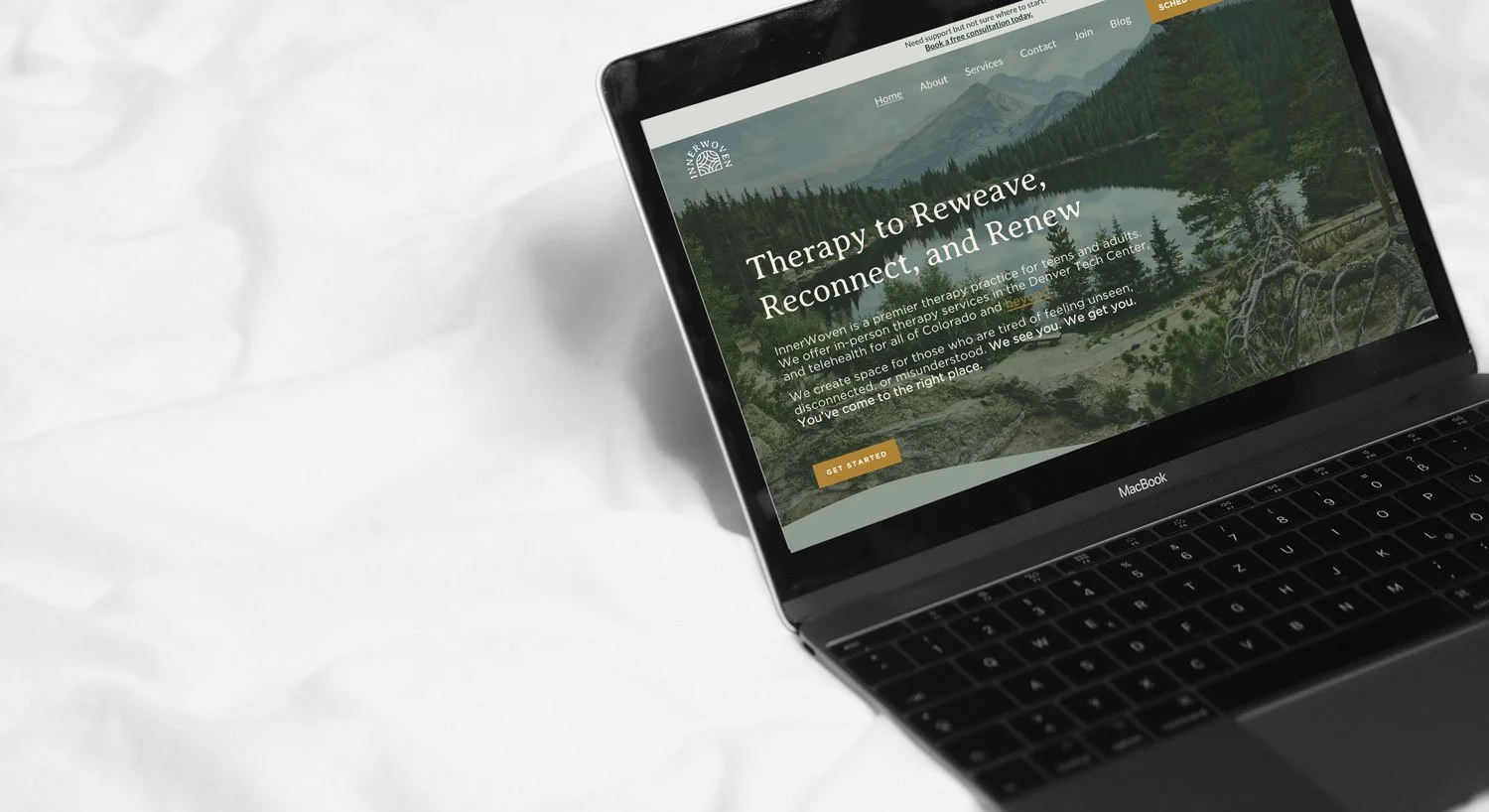

A practical guide to choosing the right Squarespace website template as a therapist, covering design philosophy, color psychology, must-have features, and three TLTF templates built specifically for therapy and wellness practices.