How to Build SEO and AIO for Your Therapy Website
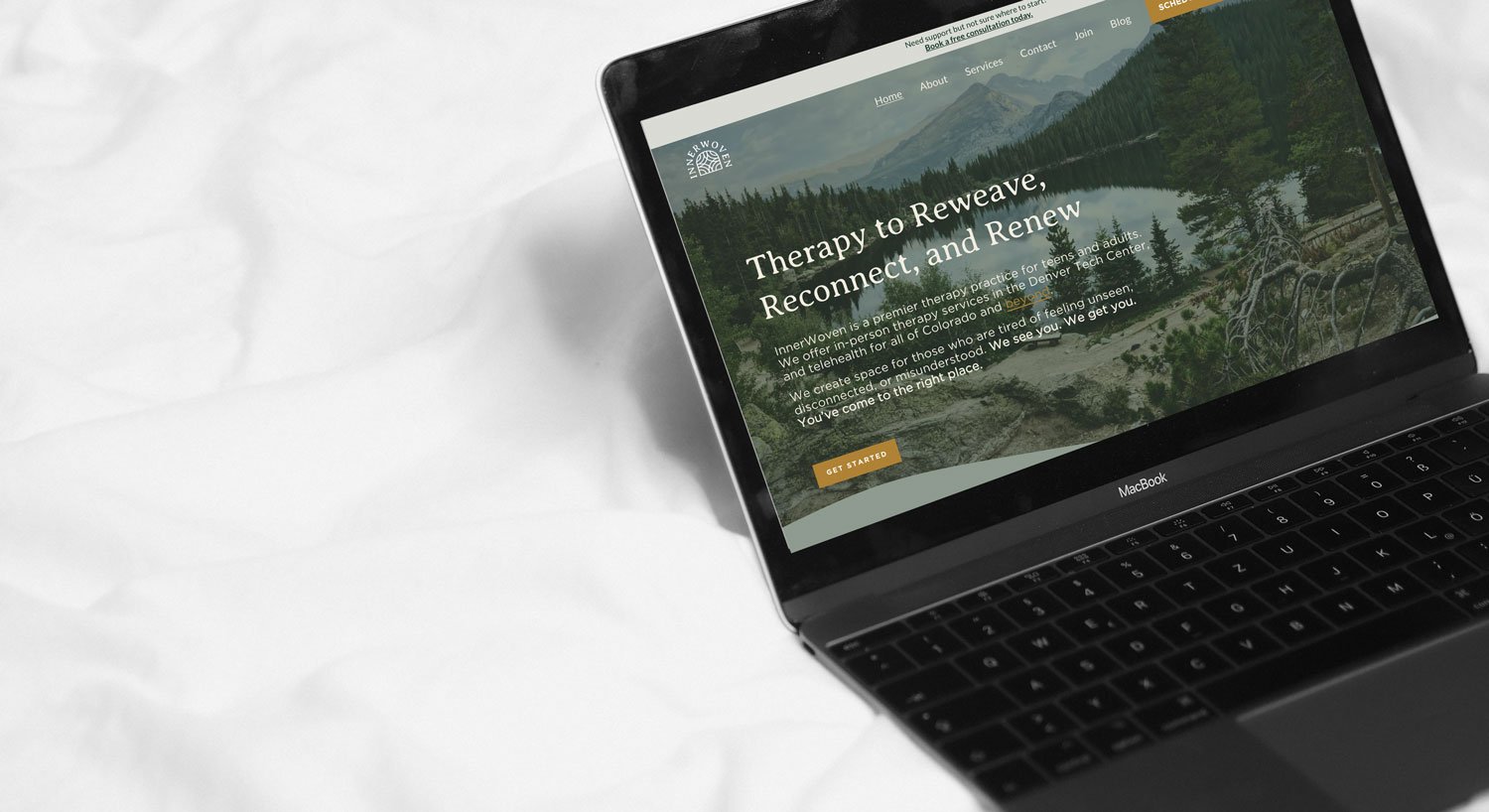
Let’s face it. Getting found online as a therapist isn’t as easy as it used to be. With new mega-therapy platforms like BetterHelp, GrowTherapy, and TalkSpace dominating search engine results, independent therapists and mental health counselors are in need of a solid strategy to be seen.
But getting found online as a therapist isn't about gaming an algorithm or stuffing your website with keywords. If you want to ensure your ideal clients and patients are finding you, here are the nine website areas that matter most:
meta page titles
meta descriptions
header structure
longtail keywords
established expertise
internal and external links
schema markup
directory listings
and the technical basics you just can't skip
With nearly half the U.S. population experiencing stress and anxiety, the need for care is real. And your website is one of the most powerful tools you have to reach the clients who are already searching for someone like you.
Why Is SEO Different for Therapists Than for Other Businesses?
When you go to your favorite search engine (or perhaps try a more secure, tracker-free one like DuckDuckGo or the earth-friendly, tree-planting Ecosia) and type in “therapist near me,” where on the list do you pop up? Near the top of the first page? On the second page? Or are you nowhere to be found?
Your answer and the result is based on the steps you’ve taken on your website to show up, otherwise known as SEO or Search Engine Optimization.
But for therapists, SEO operates under a different set of expectations than a boutique, a design studio, or a restaurant.
That’s because Google classifies mental health content under what it calls YMYL, or "Your Money or Your Life." This designation includes any content that could significantly affect a person's health, safety, or wellbeing. Because of that classification, Google reviews therapy websites more carefully and looks for stronger trust signals before surfacing them in search results.
While it may seem like a disadvantage, knowing that is actually an opportunity. It means the therapist who creates website copy that is clear, credible, and specific will consistently outperform a competitor with a prettier website that says very little.
We covered this in depth in our previous post “How to Write Content for Therapy Websites,” so if you haven't read that one yet, I recommend starting there.What Should Your Page Titles and Meta Descriptions Say?
What makes a good page title?
Your page title tag is the clickable blue headline that appears in search engine results. It also happens to be one of the highest-impact, lowest-effort improvements most therapy websites are missing.
So for each of your website pages, follow these simple steps:
Give each page a unique meta title (this is separate from the navigation title)
Instead of “Home,” try “Jane Smith | CBT Therapy in Virginia”
Instead of “Services,” try “Mental Health Services for Veterans”
Instead of “About page,” try “Meet Jane | Veteran and Military Family Therapist”
Keep your titles between 50 and 60 characters
Lead with your most important keyword
Make it specific enough that someone scanning search results knows immediately what your page is about
How to write Meta Descriptions
A meta description is the 2–3 sentence summary that appears underneath your title (blue link) in search results. It doesn't directly affect your ranking, but it absolutely affects whether someone clicks.
To ensure your ideal client clicks:
Keep it between 140 and 160 characters
write it like a human sentence (not stuffed with nonsense key words)
include your primary keyword naturally
end with a soft call to action.
I like to think of meta page descriptions as your one-sentence pitch to a potential client who is deciding in three seconds whether to click your link or someone else's.
Every single page on your website needs its own unique title and meta description. Yes, even your specialty pages, your blog posts, and your contact page. If they all say the same thing, or nothing at all, you're losing significant visibility.

If you’re not sure where to add these, I created an simple-to-follow video tutorial to simplify the process!
How Should You Structure Your Headers?
Headers (the H1, H2, and H3 tags in your website) are how both Google and AI tools understand what your page is about and how it's organized. It’s easiest to think of them like a book:
H1 is the title
H2s are the chapter titles
H3s are the sections within a chapter
H4s are sections within H3s
A few rules:
Every page has exactly one H1: your page title. On most Squarespace sites, this is your blog post title or page name, and it's already being handled automatically. You should never add a second H1 inside the body of the page.
Your H2s and H3s inside the page body should be written as natural, conversational questions. Think about how your ideal client speaks, or how they’d type a question into Google or ask a chatbot.
Instead of “Our Approach,” try “What does anxiety therapy look like?”
Instead of “Pricing,” try “How much does therapy cost?”
3.Never skip a heading level. Don't jump from an H2 straight to an H4. It doesn’t matter if you need the text to look bigger! Headings are data signals, not styling tools!

DIYing your website?
Our Embark Squarespace Templates already have the Header strategy built into each of our foundations!
BROWSE THE TEMPLATE SHOP → Not sure what you need? Take our 2-minute quiz to discover your perfect website path.
What Keywords Should Therapists Actually Use?
Keyword strategy for mental health counselors isn't about finding obscure terms, it's 100% about writing the way your potential client actually thinks and searches. Especially at 11pm when they finally decide to ask for help.
And since every therapist is unique, your keywords will be unique as well. This is where long-tail keywords come in.
Long-tail keywords are longer, more specific phrases that contain words that are important to your practice. Some of those words may include your location, your specialty, and your modalities.
Weave long-tail keywords throughout your pages naturally (that means never forced and always in complete sentences):
In-person therapy for women in [state]
Online counseling for chronic illness
Chronic pain support therapy for patients and caregivers
Therapist for struggling parents and educators
How does virtual therapy work?
Sliding scale therapist [state]
What is a superbill for therapy?
Therapist accepting [insurance plan] in [state]
One important note specific to therapists: your clients often don't know the clinical language for what they need, they know how they feel. Someone searching for help with intrusive thoughts may not know the word "OCD." Someone exhausted by hospital shifts may not search "burnout therapy,” they might search "therapist who understands nurses."
Write in your client's language, not your clinical language! This will not only help you find more clients, but rank you higher in search engine and AI results, too!
How Do You Establish Expertise on Your Therapy Website?
Along with the YMYL standard I shared above, Google also reviews mental health websites for E-E-A-T (Experience, Expertise, Authoritativeness, and Trustworthiness). And after years of designing websites for therapists and coaches, without a doubt, trust is the most important of these standards.
Here's what E-E-A-T actually looks like in practice:
Your full name and credentials appear on every page, not just tucked into your About page.
Your license number, licensing body, and the states where you're licensed should be clearly visible.
Your specializations are written in plain language that matches what your clients are searching for.
Your About story is focused on building authentic connection, not credibility.
Your bio is separate from your credentials list.
You share client testimonials with names and specific outcomes named.should name specific outcomes rather than general praise.
If you follow these practices, your website will clearly demonstrate who you are and what you're qualified to do, as well as signal that your practice is real and established.
How Should Therapists Use Links on Their Website?
Links are one of the most overlooked and highest-impact elements of a therapy website's SEO. Here are the three types of links you need to include:
What are Internal Links?
Internal links connect your own website pages and blog posts to each other. Your homepage should link to each specialty page. Your specialty pages should link to relevant blog posts. Your blog posts should link back to your service pages and to each other. And every blog post should link to your contact or consultation page (often through CTAs, or calls-to-action).
This does two things: it helps potential clients move naturally through your content, and it helps Google understand the depth and structure of your site. A therapist who blogs about anxiety and links that post to their anxiety therapy service page is telling both the reader and the algorithm that this website is where expertise lives.
What are External Links?
External links point from your content outward to credible sources. Think the American Psychological Association, the National Institute of Mental Health, published research, or reputable health publications.
For YMYL content like therapy, linking to verifiable external sources strengthens your E-E-A-T signals significantly. It tells Google you're not just making things up! You’re actually part of a credible, professional conversation!
What are Backlinks?
Backlinks are links from other websites pointing to yours. These are by far the hardest to earn, but they are arguably the most valuable.
For therapists, the most realistic and highest-quality sources are your state licensing board profile, directory listings on Psychology Today and TherapyDen, local press coverage, podcast appearances in your specialty, and guest posts on mental health publications.
But not all links are created equally.
One link from a real local news outlet is worth more than fifty directory links. And a podcast appearance, even without a direct link, creates a brand mention that AI tools and search engines both recognize as a trust signal!
What Is Schema Markup and Does Your Therapy Website Need It?
Schema markup is structured code added to your website that tells search engines and AI tools exactly who you are, what you do, and where you practice. And the good news? You don't need to be a developer to use it!
In fact, here is a quick and easy way to learn more about website schema and how to implement it simply onto your site today!
For therapy websites specifically, the schema types that matter most are:
LocalBusiness: include your practice name, address, phone number, and hours. This is what helps you appear in local search results and on Google Maps.
Person: include your credentials, specialty, and professional identity. This is what tells AI tools that you are a licensed, qualified mental health professional rather than just a website about therapy.
Article or BlogPosting: include your blog’s URL, H1 headline (title), short description, your name (author), and the date of publication.
FAQPage: include the questions and answers from your pages and blog posts.
Note: Yes, Google removed the visual FAQ rich results from their search displays in May and June 2026. However, FAQPage schema still signals your content structure to AI systems making your posts more likely to be cited when someone asks a related question to ChatGPT, Claude, or Perplexity.
While this may all feel like gibberish, you can use this schema generator to create the code needed for your website.
Where Else Does Your Practice Need to Show Up?
Search engines and AI tools don’t just rely on your website! They want to see you across the web.
Therapist Directories
For therapists, consistent listings on the major mental health directories strengthen the engine's confidence that your practice exists and is credible.
The key directories for therapists are:
My advice? Get listed on as many as possible, and make sure your name, credentials, address, phone number, and specialty are identical across every single one.
State Licensing Board
If your state licensing board has a public "find a therapist" page, claim your profile there and link it to your website. These are the highest-authority backlinks available to therapists because they confirm your license directly to Google.
Google Business Profile
If you have a physical office or serve a specific geographic area, your Google Business Profile (GBP) deserves real attention. Your Google Business Profile is often more important than your website when it comes to local SEO. That’s because potential clients will see your GBP before they click on your site. Sometimes, they don't click at all. So ensure your profile is complete, active, and frequently updated with your correct specialty, service area, hours, and photos.
What Are the Technical Basics for Therapy Websites?
I promise these are simple enough you don’t need me or another developer to make these changes to your Squarespace website. But if you skip them, you are reducing your visibility every day.
Mobile optimization
Most people are searching for therapists on their phones. A site that doesn't load or display cleanly on a phone is losing potential clients before they ever read a word. Not only will clients be turned off by an unprofessional mobile site, but Google deprioritizes sites with poor layout.
Page speed
If your site takes more than three seconds to load, many visitors will leave before it finishes. Large uncompressed images are the most common culprit on therapy websites. Fix them immediately!
Image alt text
Every image on your site needs a plain-language description of what it shows. This matters for accessibility, for SEO, and for AI tools trying to understand your page. No more IMG_4821.jpg. Instead, try "woman sitting at a desk speaking on a video call with her therapist.”
Last updated dates
Add a visible "Last Updated: [date]" note to every blog post and service page you refresh. Recency signals matter to both Google and AI tools.
Crawlability
Make sure AI bots aren't accidentally blocked from accessing your site! This is a setting in your website platform, usually under SEO or Privacy settings. You can use this tutorial here if you’re a Squarespace user like us!

If all of this feels like a lot to process, it is! SEO is a long game, and doing it well while also running a therapy practice is genuinely a lot to ask of one person.
That's what we're here for. Our Embark Beyond website and content package includes content in your own voice and has SEO and AIO strategy built into every page.
Therapy and Counseling Website FAQ
-
Most therapy websites start seeing meaningful movement within three to six months. I know that feels like a long time, but SEO really is a long game strategy. Your ranking also depends on competition, website quality, and the consistency of the content strategy.
Technical fixes and Google Business Profile updates can show earlier results, while competitive keyword rankings take longer to build.
-
You can absolutely make meaningful progress on your own with your page titles, meta descriptions, header structure, and directory listings. Where professional help tends to pay off most is in keyword strategy, schema markup, and building a content plan that compounds over time. If you’re short on time, I recommend starting with fixing your page titles and claiming your Google Business Profile.
If you're not sure where to start and need support, reach out to learn more about our blog content marketing packages, copywriting optimization, and Embark Beyond packages.
-
Yes. Every post is a new entry point for potential clients to find you. The posts that perform best for therapists answer the practical questions people ask before booking and build trust and connection before the first call.
-
SEO focuses on getting your website to appear in traditional Google or browser search results. AIO (AI Overview Optimization, sometimes called GEO) focuses on getting your content cited by AI tools like ChatGPT, Claude, Perplexity, and Google's AI Overviews when someone asks a question.
In 2026 both matter, and the practices that serve one largely serve the other: clear structure, direct answers, and demonstrated expertise benefit all of them.
-
Google Search Console is the most direct way to see what search terms are bringing people to your site and how many impressions your pages are getting. It's free, takes about 15 minutes to set up, and will tell you more about your actual search visibility than any paid tool.
You can also review your Squarespace analytics in a few simple steps here.
If you’re ready for your website to actually work for you, most of the highest-impact changes aren't complicated. They're just specific, intentional, and consistent. And for a therapist whose whole practice is built on showing up clearly and being genuinely present for the right people, that's not an extra ask: it's already exactly who you are. Now it’s time to make sure your website shows it!

Upgrade your Therapy Website with our Harmony Template, a grounded and spacious Embark design layout crafted for brands rooted in care, regulation, and reflection.
Last Updated: July 2026